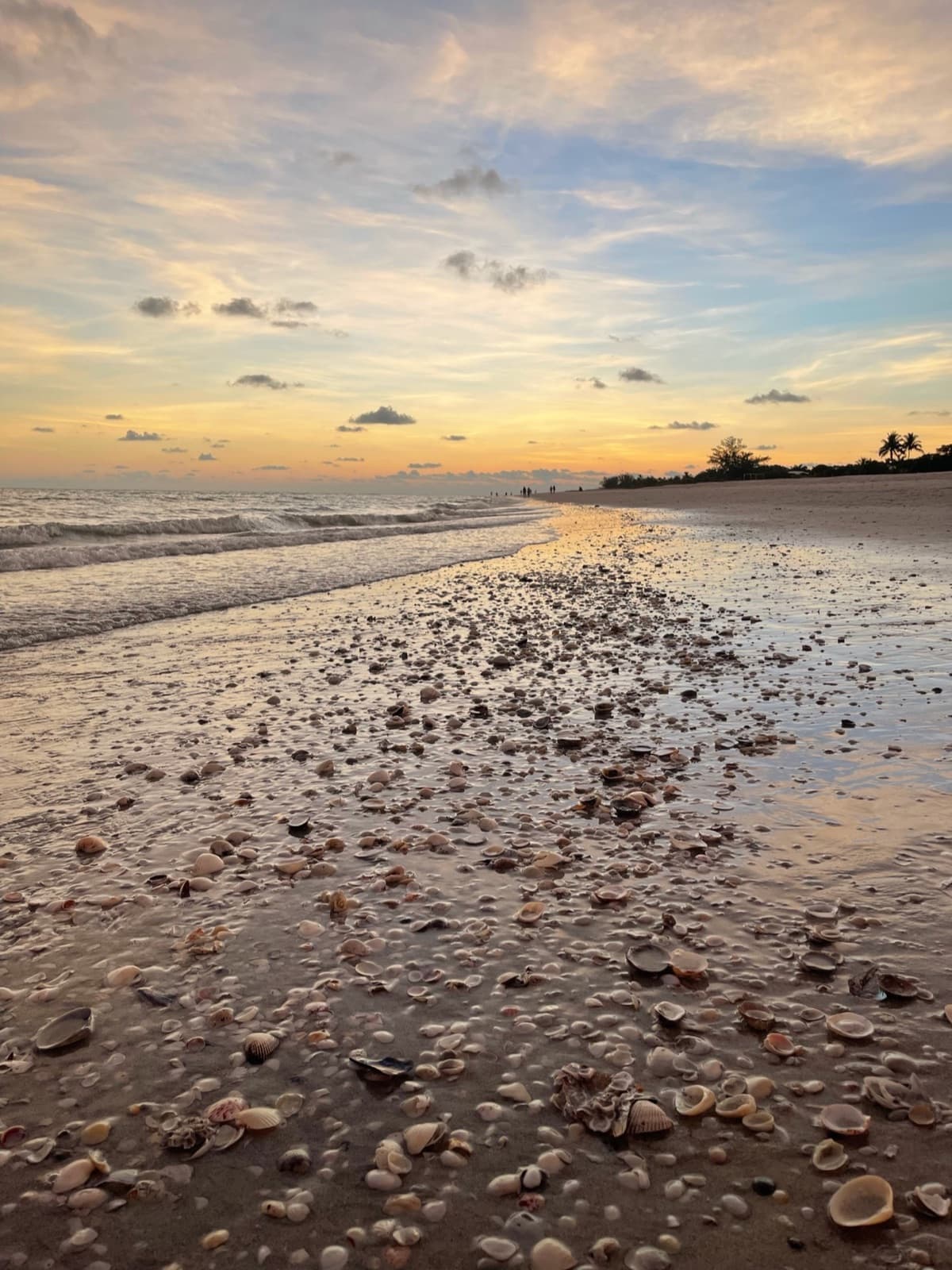
Sanibel Island is world-famous for shelling, and for good reason. The island's unique east-west orientation acts like a giant scoop, catching shells from the Gulf of Mexico and depositing them on its beaches.
When to Go
The best shelling happens at low tide, especially during winter months (December through March) when cold fronts push shells ashore. Check the tide charts and plan to arrive about an hour before low tide for the best selection.
What to Bring
- A mesh bag or bucket for your finds
- Comfortable water shoes (broken shells can be sharp)
- Sunscreen and a hat
- A shell identification guide
The Sanibel Stoop
You will quickly notice everyone on the beach bent over at the waist, scanning the sand. This signature pose is affectionately known as the "Sanibel Stoop" — and you will be doing it too before long.
Top Shells to Find
Keep an eye out for junonia (the holy grail of Sanibel shells), lightning whelks, alphabet cones, lion's paws, and the colorful calico scallop. Live shelling is prohibited on Sanibel, so only collect empty shells.
Best Beaches for Shelling
Bowman's Beach and Blind Pass consistently produce the best finds, but every beach on Sanibel has shelling potential. The key is timing — arrive at low tide, ideally after a storm or strong winds.